Medical Injector → Edge
A deterministic, real-time contrast-injection controller with safety monitoring, and clinical workflow.
- C++
- Qt/QML
- gRPC
- Modular Monolith
Problem
Medical contrast injectors are safety-critical systems whose control logic, fault handling, and operator workflows are sometimes locked inside proprietary hardware. That makes them hard to demonstrate, test, or reason about without access to specialized equipment.
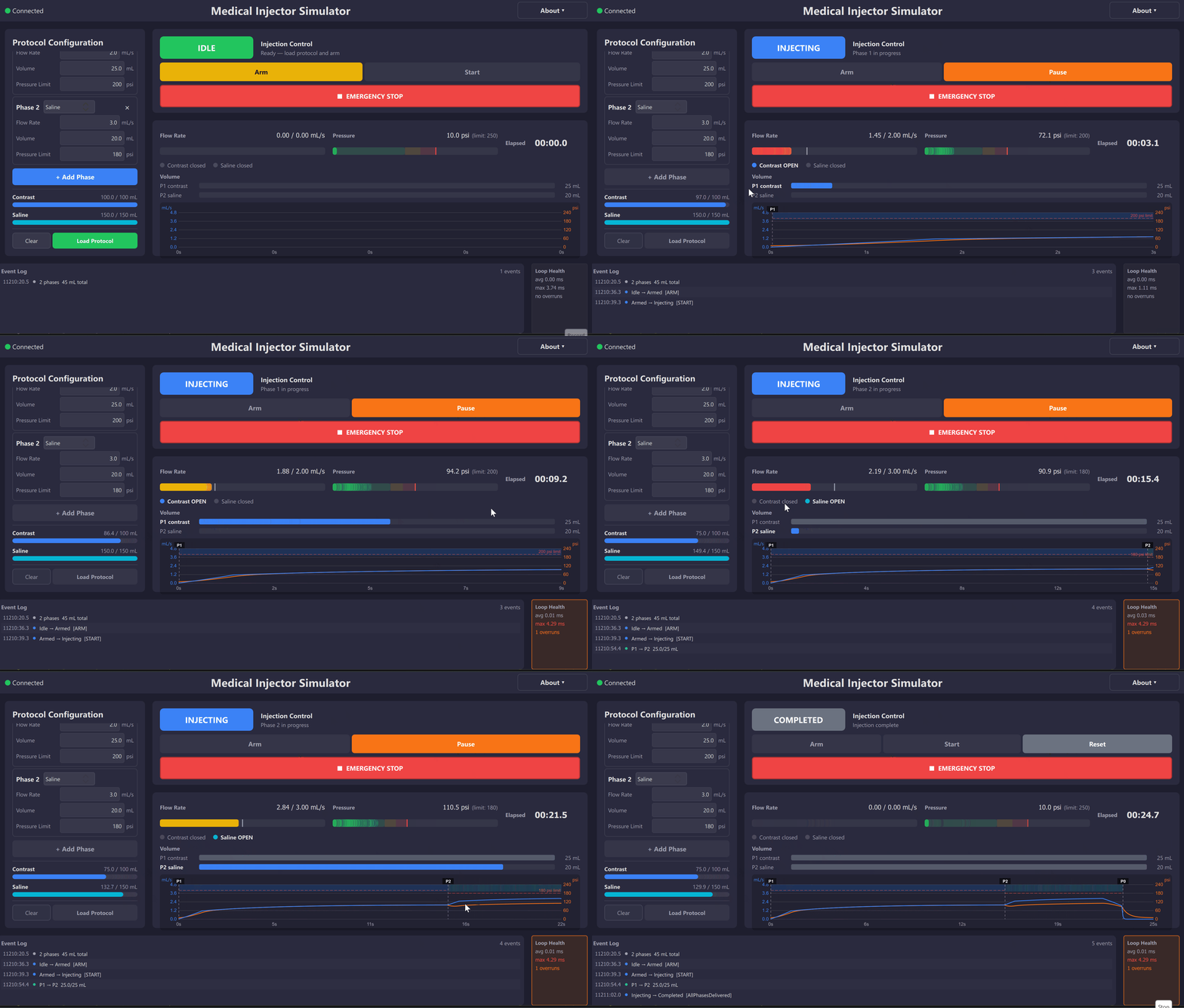
I built a software control system with simulated hardware devices, so those behaviors are visible without needing a physical injector. Users can:
- configure multi-phase contrast/saline protocols
- run protocols through a real-time control loop
- observe live telemetry as the simulated hardware devices respond
- trigger faults without physical injector hardware or clinical risk
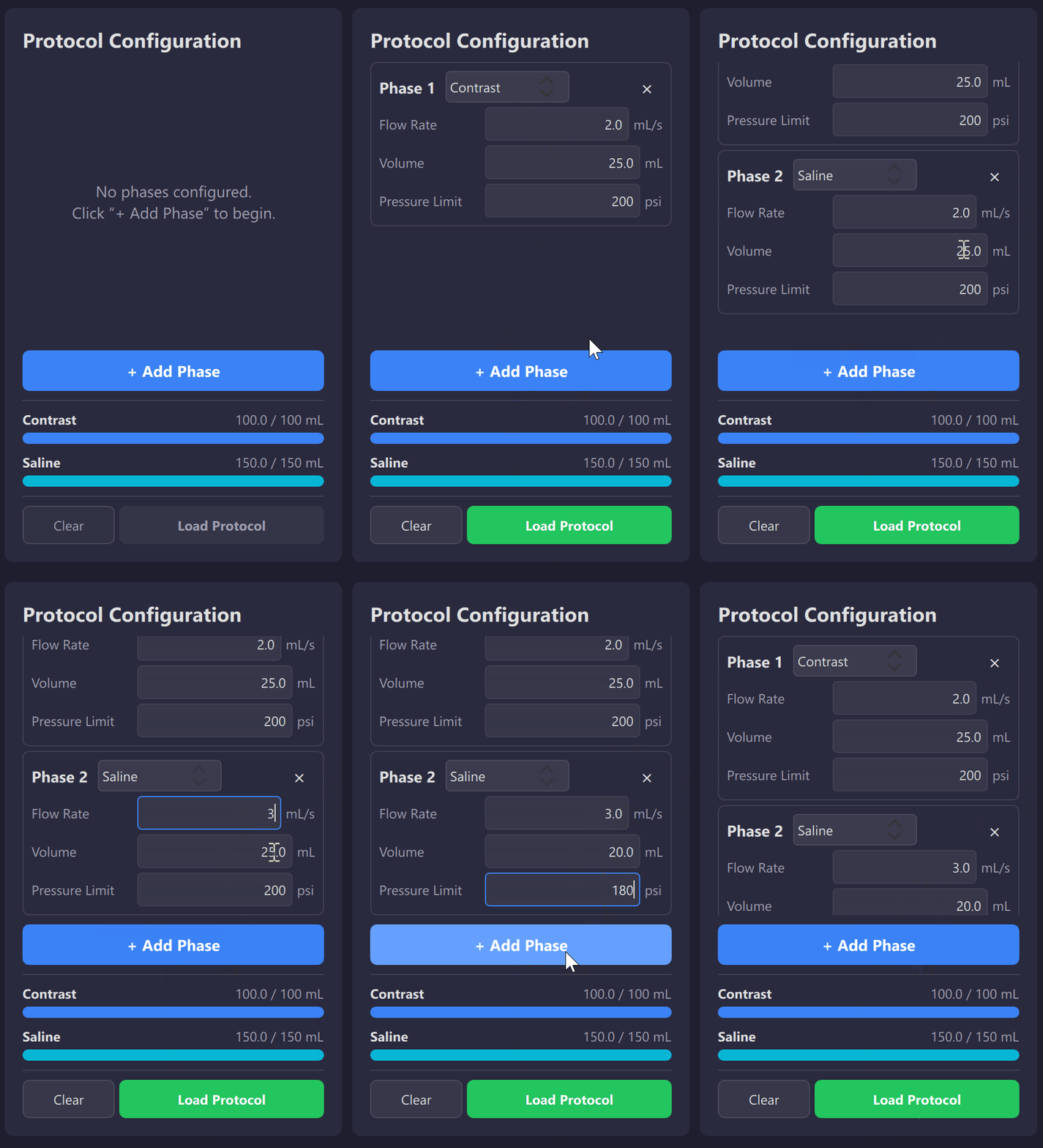
Protocol setup for a multi-phase contrast/saline injection.
Complexity
Real-Time Simulated Hardware Devices
The project had to feel like a real device without being connected to one. A configurable C++ PID control loop targets a 2 ms cadence while driving simulated motor, valve, syringe, pressure, and air-detection devices. An independent safety monitor targets a 1 ms cadence while watching for overpressure, air, motor divergence, and timing faults.
| System concern | Implementation choice |
|---|---|
| Control timing | Configurable C++ PID loop targeting a 2 ms cadence |
| Safety timing | Independent monitor targeting a 1 ms cadence |
| Simulated hardware layer | Motor, valve, syringe, pressure, and air-detection devices |
| Operator feedback | Live gauges, charts, event logs, and fault reports |
Live Operator Feedback
The Qt/QML frontend streams backend-owned state over gRPC, so the dashboard reflects the actual backend state rather than a scripted UI. During a run, the operator can see pressure, flow, volume, valve state, and loop health change as the backend advances the protocol.
Observability
Faults are exposed as first-class system events rather than hidden side effects. When the safety monitor detects a problem, the backend emergency-stops the simulated hardware devices, publishes a structured fault event, and keeps the operator view aligned with the control system state.
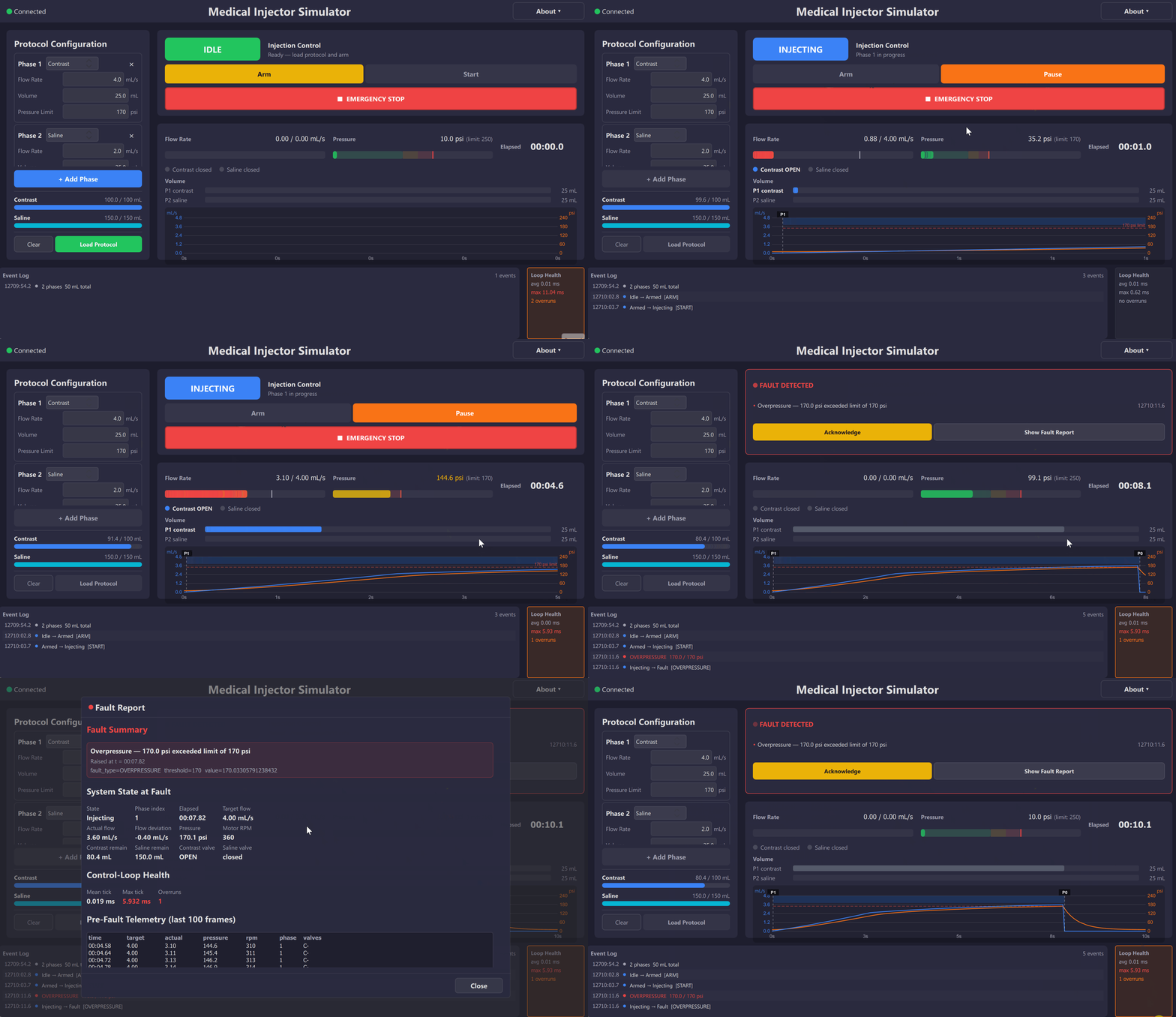
Fault injection and observability path from simulated hardware state to operator-facing report.
Architectural Design
Process Boundary
I split the system into a C++ backend and a Qt6/QML frontend connected by a protobuf-defined gRPC contract. The process boundary keeps the UI out of the real-time path while still giving operators a live, inspectable view of the system.
Backend Layers
The backend is organized around small, testable layers:
- hardware abstraction
- deterministic physics models
- configuration loading and validation
- PID control
- non-blocking telemetry logging
- state-machine orchestration
- independent safety monitoring
- command, telemetry, event, and fault streaming
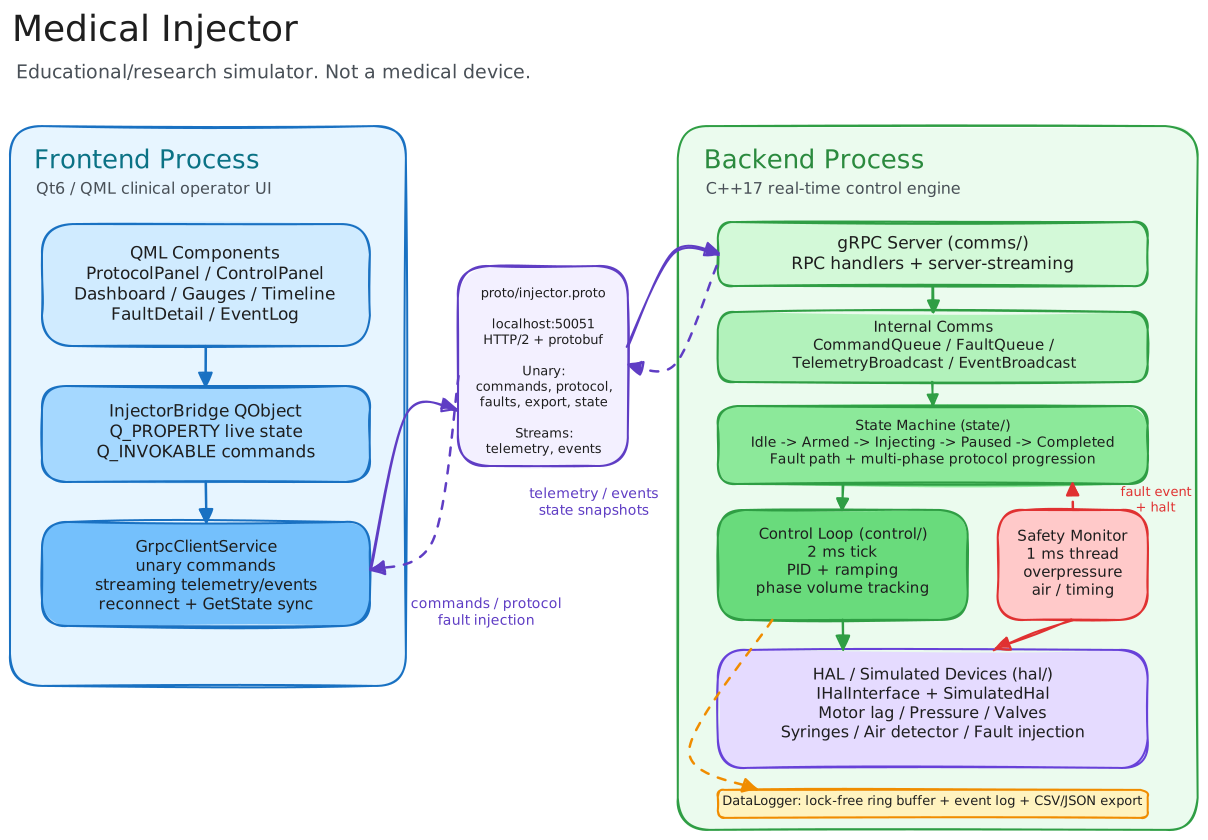
Frontend and backend architecture diagram.
Architectural Tradeoffs
Native Control Stack Over Web-First Tools
I chose C++, gRPC, and Qt/QML because the project needed to behave like instrument control software, not a conventional web app. The tradeoff was more systems-level complexity in exchange for tighter control over timing, threading, process isolation, and telemetry flow.
| Choice | Why it fit | Tradeoff |
|---|---|---|
| C++ | Direct thread control, predictable performance, no garbage collector, and a natural fit for instrument-control software. | Requires more discipline around memory, concurrency, and undefined behavior than managed languages. |
| gRPC + protobuf | Strongly typed command/telemetry contracts, efficient server streaming, and a clean frontend/backend process boundary. | More setup than REST or WebSockets, especially around code generation and streaming clients. |
| Qt/QML | Native desktop UI, reactive bindings for live telemetry, and a realistic embedded-device UI path. | Less ubiquitous than web frameworks and requires a Qt-specific bridge between QML and backend services. |
I considered higher-level stacks like Python, Go, C#, Electron, and browser frameworks, but they either introduced garbage collection, weaker timing control, browser/proxy deployment overhead, or a less realistic fit for a medical-device-style operator interface.
Deterministic Hardware Behavior
I favored deterministic, explainable physics over maximum biomedical fidelity so the same protocol produces the same pressure/flow trace every time. That made the control software more useful as an engineering case study: simulated hardware behavior can be replayed, inspected, and tested without random noise hiding the control logic.
Isolation Over Simplicity
I chose gRPC and a process boundary over a simpler in-process UI because it mirrors production control architectures and makes failure isolation more explicit. The UI can observe and command the backend, but it does not own the timing-sensitive state.
Backpressure-Aware Telemetry
I used bounded queues, telemetry coalescing, and ring-buffer logging so charts, exports, or slow clients cannot block the timing-sensitive control loop.
Outcome
The finished control software turns a closed medical-device domain into an inspectable system. A reviewer can trace a command from UI action to backend state transition, control-loop response, simulated hardware behavior, safety intervention, and live dashboard feedback.
It supports:
- complete multi-phase injection runs
- live pressure, flow, volume, and timing telemetry
- pause, resume, reset, and emergency-stop workflows
- realistic fault injection
- fault reports and operator-facing event logs
- run-data export
- tests across simulated hardware devices, state transitions, timing behavior, safety paths, and gRPC integration
Code entry points
github.com/brokhuli/medical-injector
-
readme/architecture-summary.md— System architecture -
readme/architecture-decision-record.md— Architectural decisions -
proto/injector.proto— gRPC command, telemetry, and event contract -
backend/src/control/ControlLoop.cpp— Real-time PID control loop -
backend/src/safety/SafetyMonitor.cpp— Independent safety monitor -
backend/src/state/StateMachine.cpp— Injection state machine and protocol progression -
backend/src/hal/SimulatedHal.cpp— Simulated hardware devices and physics models